There are tons of period products on the market, and it can be hard to know which one is best. We’ve compiled a bunch of information about the three most commonly used period products, how much they cost, the risks, and the pros. Keep reading and decide which one you think comes out on top.
What is a tampon?
A tampon is a disposable period product that is made from cotton or rayon and inserted into the body. It is cylinder-shaped with a string at the end to pull for removal. Once inserted correctly, the vagina holds the tampon in place, where it will expand as it soaks up your period blood. They can come with or without applicators for ease of insertion, and come with different absorbency ratings between 6 to 18 grams.
The economics of a period with tampons
Depending on where you live, tampons are not an expensive purchase, but it can add up when you look at the overall cost. On average, a person with a period spends over $1,500 in a lifetime, and it can be even more if you buy organic tampons.
Pros of tampons
- They are easy to use and discrete and are compact and small enough that you can carry them in your purse.
- You can go swimming and play sports without having to worry about your period or a pad bunching up.
- When inserted correctly, they are comfortable and cannot be felt during wear.
- You can also wear any kind of underwear with them without having to worry.
Cons of tampons
- You can only wear them for 8 hours
- Tampons can leave fibers or residue inside the body, and this can lead to bacterial infections or inflammation.
- Higher risk of TSS or Toxic shock Syndrome can be caused by tampons, it can be fatal, and although it is rare, it’s important to be aware of the risks.
- They can be made with chemicals that can throw off your natural balance.
What is a menstrual cup?
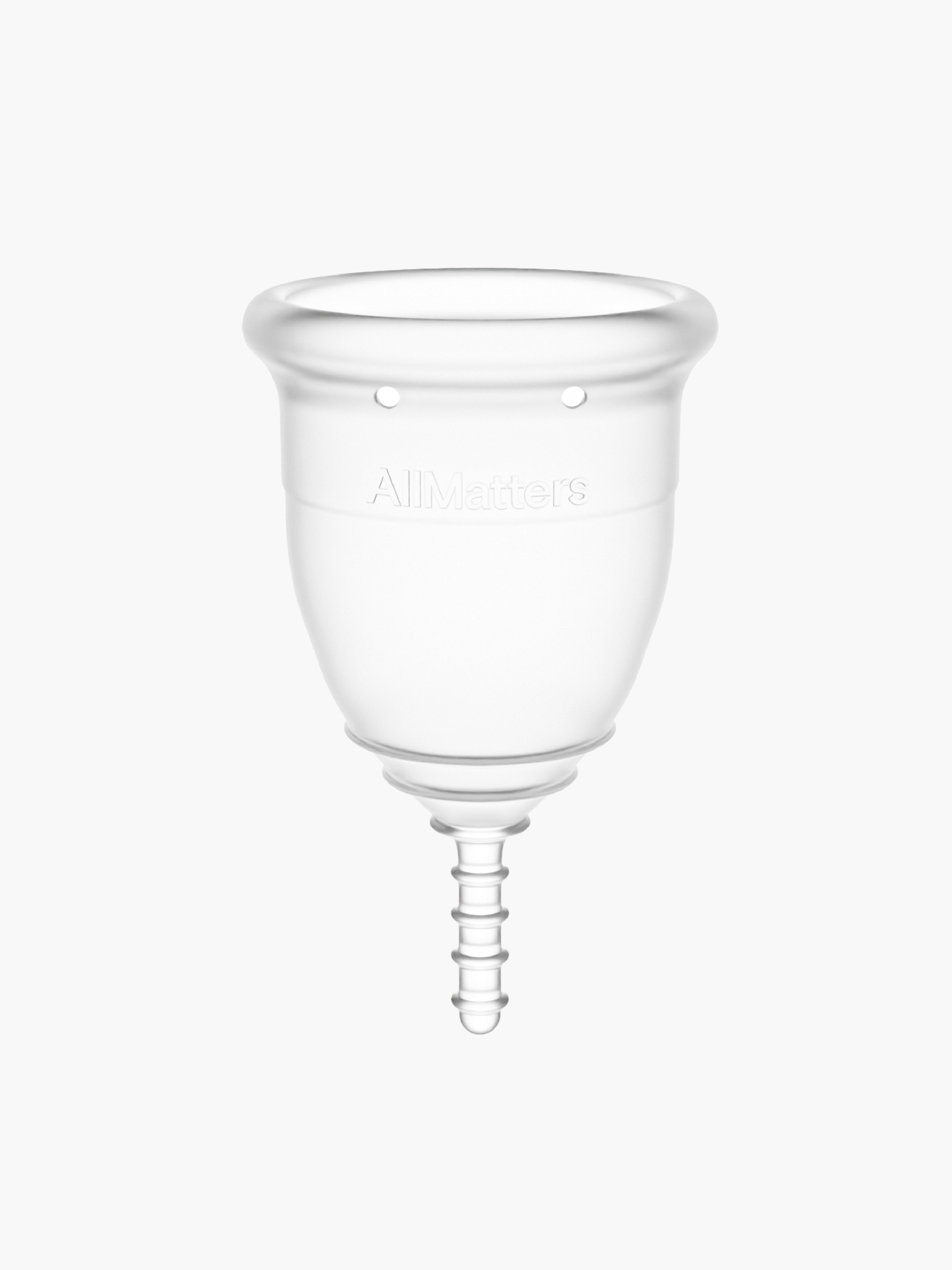
Unlike pads or tampons, menstrual cups collect blood instead of absorbing it. It is a flexible cone-shaped period product that is made from 100% medical-grade silicone. It is inserted into the vagina and can be reused for years.
Economics of menstrual cups
A menstrual cup is initially more expensive than a box of tampons or pads, but you have to buy those disposable period products monthly. The AllMatters menstrual cup lasts for years, and were on average just 5% of the cost of pads, and only 7% of the cost of tampons, according to one study. They can also benefit low-income families and developing countries.
Environmental impacts of menstrual cups
Menstrual cups have been around for a while now, but have only recently been picking up in popularity. Since AllMatters menstrual cup has been tested to last up to 10 years, there is potential to reduce the use of up to 2,400 tampons per one cup. The packaging is kept to the absolute minimum, with recycled cardboard packaging, instructions printed on the inside of the box, and a cotton bag. This eliminates the need for plastic and paper and reduces waste.
Pros of menstrual cups
- They are cheaper than pads or tampons
-
They can be cleaned and used again
- They last up to 12 hours
- They do not absorb any bacteria and can’t upset your body's natural pH balance
- They have no odor
Cons of menstrual cups
- There is a learning curve, it can be tough to get the hang of how to insert and remove a menstrual cup
- It can be messy. Having to break the seal to remove the cup can be messy at times
-
You have to clean your cup and stay on top of sanitization
What is a pad?
A pad or sanitary napkin is a disposable noninvasive period product that sticks or clips to your underwear and catches the blood from your period. They are rectangular in shape, come in different sizes, need to be changed often, and are made from plastic, cotton, and rayon.
Economics of pads
Tampons and pads are similarly priced, which is affordable for some. You might want to compare the long-term costs of disposable and reusable options. Reusable pads are a great option, as well as other reusable menstrual products.
Environmental impacts of pads
Many disposable pads end up in landfills, oceans, and wreak havoc on our planet. They are often made up of synthetic fibers that takes years to break down and degrade. And just one pack of pads contains the same amount of plastic as four grocery bags. To top it all off, some pads contain harmful chemicals like rayon and dioxide that pollute groundwater and air
Pros of pads
-
Reusable pads can be washed and worn again
- More options for absorbency, there are long pads, thick pads, and super thin ones, you have a lot of options when it comes to wearing pads
- No risk of TSS which means less to worry about
Cons of pads
- You have to change them every 3 to 4 hours, this can be annoying, and it’s hard to be discrete
- Can cause irritation to the vulva from pad rash, especially if there are chemicals, adhesive or fragrance added to the menstrual product
- Can bunch up and become uncomfortable, and at worst, let you leak
- Because they easily bunch up, it can be hard to do sports or other high-motion activities. You also can’t swim in them.
Tampons vs. menstrual cups vs. pads, who comes out on top?
Disposable period products like pads and tampons are convenient options with a relatively low upfront cost. Menstrual cups can save you money over time, but if you don’t feel comfortable wearing one, a reusable pad or even period underwear is a great choice as well.
Frequently Asked Questions (FAQs)
Menstrual cup vs pads: which is better?
The choice between menstrual cups and pads depends on individual comfort and preference. However, menstrual cups have several advantages over pads. They are reusable, eco-friendly, and cost-effective in the long run. They are reusable and can save you money over time.
Is a menstrual cup better than pads?
Some people prefer menstrual cups to pads because they find them comfortable and convenient. However, it's important to note that what works best can vary from person to person.
Period cup vs pads: which is more effective?
Both menstrual cups and pads are effective at managing menstrual flow. However, menstrual cups can hold more fluid than pads and can be left in place for longer periods of time. They can also be cleaned and used again.
Why are menstrual cups better than pads?
Menstrual cups are considered better than pads for several reasons. They can be cleaned and used again. They are also more cost-effective in the long run and can be worn for up to 12 hours at a time. Many people also find them more comfortable and reliable than pads.
One menstrual cup is equal to how many pads?
A single menstrual cup can last for several years with proper care, which could potentially replace hundreds or even thousands of pads over its lifetime. The exact number will vary depending on the individual's flow and how often they would typically change their pad.
Are tampons more expensive than pads?
The cost of tampons vs. pads can vary depending on the brand and the specific products. However, both tampons and pads are generally more expensive in the long run compared to reusable options like menstrual cups, since they need to be continuously purchased.
In conclusion, the choice between tampons, menstrual cups, and pads will depend on your personal preferences, comfort level, and lifestyle. It's essential to consider all these factors and choose the menstrual product that best suits your needs. Reusable options like menstrual cups and washable pads may save you money over time compared to disposable products.
Why Menstrual Cups Are Better Than Pads
When it comes to period care, some people prefer reusable options like menstrual cups to disposable pads. Here’s why menstrual cups are often considered a better choice:
Cost-Efficiency
While pads need to be purchased regularly, investing in a menstrual cup is a one-time expense. Our AllMatters menstrual cup can save you up to 95% of what you'd normally spend on pads over several years.
Healthier Option
Menstrual cups are made from 100% medical-grade silicone, making them less likely to cause irritation or disrupt the vagina's natural pH balance.
Longer Wear Time
You can wear a menstrual cup for up to 12 hours, depending on your flow. Pads generally require changing every 3 to 4 hours.
Versatility
Menstrual cups are versatile and can be worn during all kinds of physical activities, including swimming and other sports, which can be a challenge with pads.
Discretion
Menstrual cups are more discreet. There’s no need to worry about odors or the sound of rustling pads when you move.
Frequently Asked Questions (FAQs)
Menstrual Cup vs Pads: Which is Better?
The choice between menstrual cups and pads ultimately depends on your personal comfort and needs. Menstrual cups like the AllMatters menstrual cup can be used again and may save you money over time compared to disposable pads.
Why are Menstrual Cups Considered Better than Pads?
Some people prefer menstrual cups for their potential cost savings, wear time, versatility, and discretion.
Further Reading: